Wrong Side of the Tracks
The American railroad denotes adventure, exploration, and manifest destiny, but also nostalgia, dominance, and separation. The later half of the 19th Century saw the first transcontinental railroad cut across Nebraska, Wyoming, Utah, Nevada, and California, slicing through indigenous lands, and displacing communities who had considered this region sacred ground for thousands of years. Almost a century later trains were a main mode of transpiration for the rich and the poor alike exemplifying social class hierarchies. Shanty towns popped up along the tracks during the height of the great depression, and these same tracks cut through neighborhoods, drawing a line in iron between the haves and the have nots. Does the railroad symbolize progress or oppression? What does it mean to be from the “wrong side of the tracks” both literally and figuratively?

The Difference Between Rock and Roll, Erick Johnson

Ramble/Root, Reed Peck-Kriss
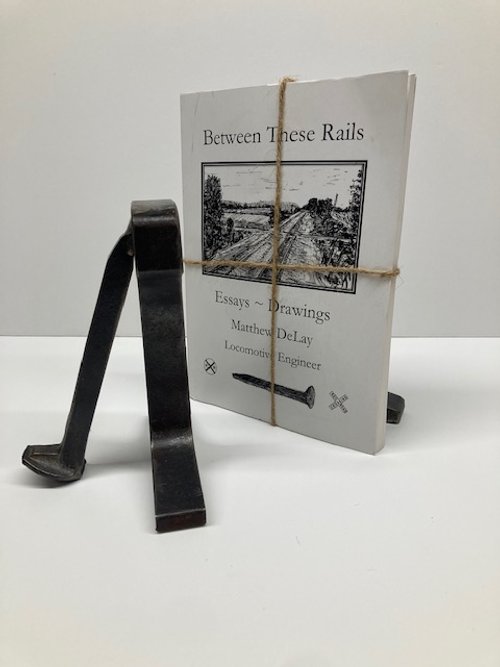
The Proletariat Bookshelf, Matthew DeLay

Bride of the Ancient Mariner, Natasha Seedorf
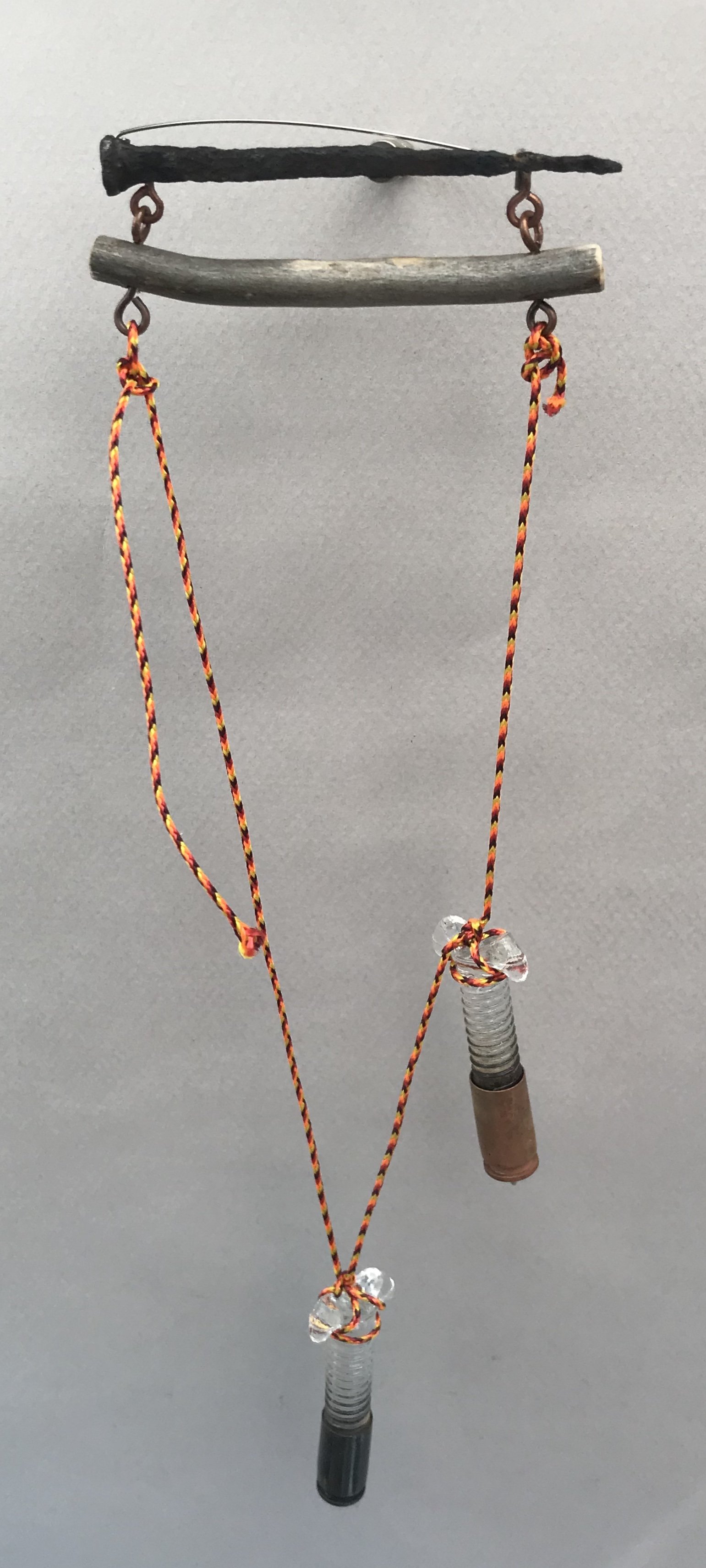
When Playing With Knives Just Isn't Enough, Natasha Seedorf

Atis: So Close But So Far Away, Natasha Seedorf
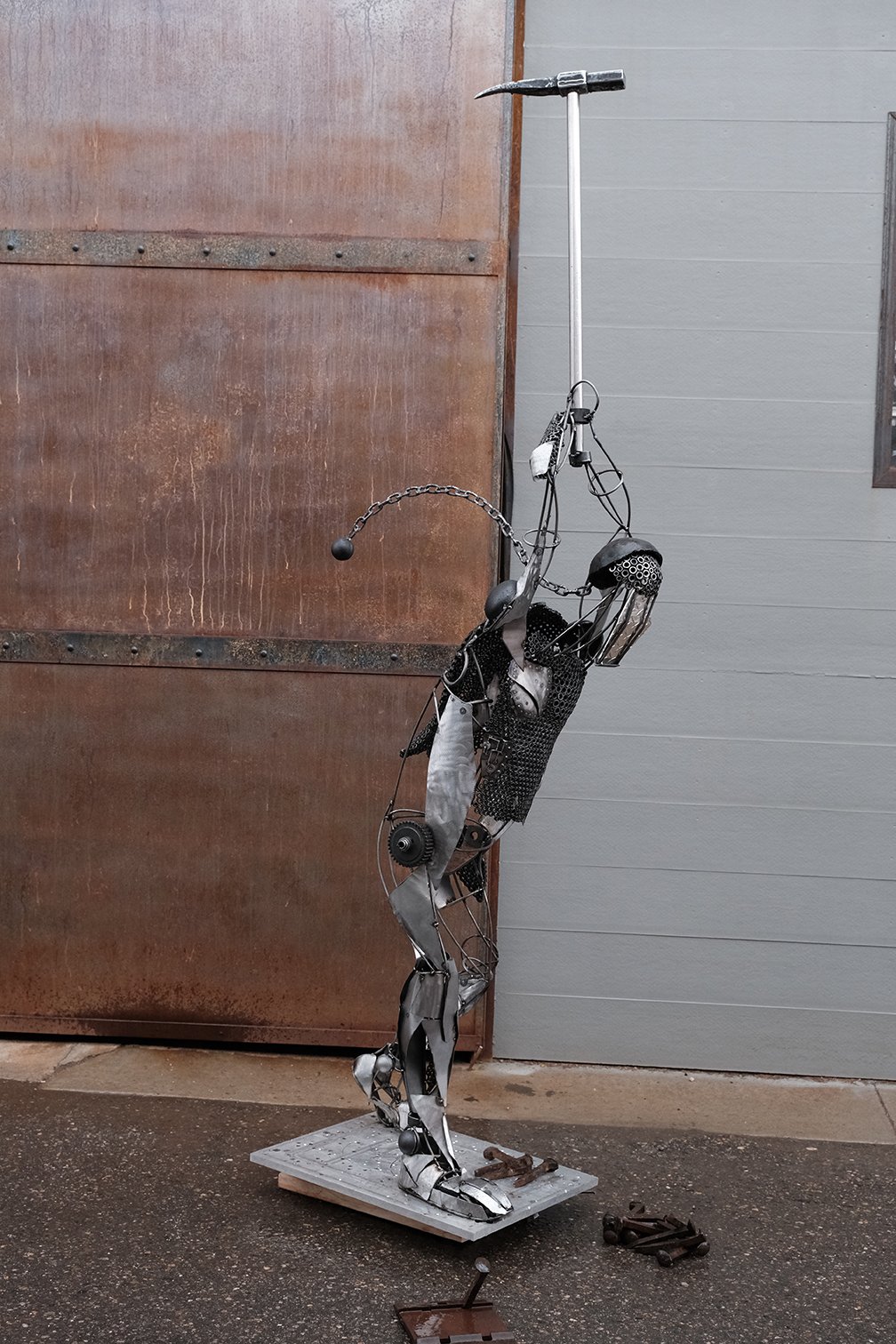
Johnny Chinaman I, Drew Hsu

Sectional Track Spoons, Kim Harrell

Tatanka, Susan White

South Pass City, Jennie Milner

House on a Pedestal, Jennie Milner

Room Without a View, Stacy Bayne
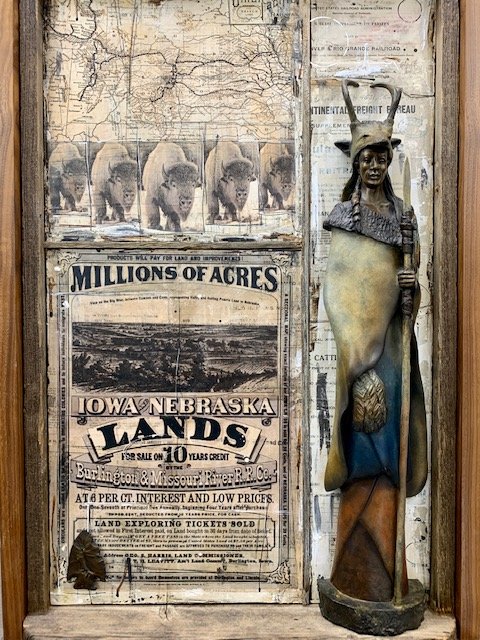
At the Intersection, Stacy Bayne
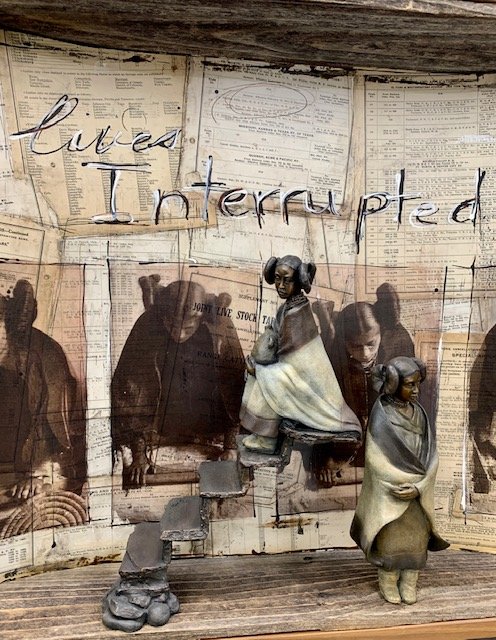
Lives Interrupted, Stacy Bayne